


Six days into 2026 and fires have already left behind death, destruction, and disruption across homes, high-rises, factories, buses, bars, and public buildings. A new year did not slow fire down. It never does. Celebration, crowds, production restarts, electrical loads, decorations, and human activity all peak at the start of the year—and fire thrives in exactly these conditions.
Celebration is important. No society functions without it. But celebration without the right preventive fire safety measures is reckless. No one wants to begin a new year rebuilding a bar, restarting a factory from ashes, writing off a bus, or standing outside their home watching firefighters do damage control. Fire does not see New Year, birthdays, age, or emotion. It only reacts to fuel, heat, and oxygen—and when it strikes, it strikes hard, leaving lessons people never forget.
Below are 10 real fire incidents already recorded in 2026. Different locations, different occupancies, same failures.
FIRE INCIDENTS RECORDED IN 2026
- DMRC Staff Quarters Fire – Majlis Park, Delhi (India)
A fire broke out inside staff housing allotted to metro employees. A couple and their daughter lost their lives. The fire originated internally and spread rapidly within the residential unit, filling the space with smoke before occupants could escape. Preliminary findings point toward an electrical short circuit. This was not a large fire; it was a fast one.
- High-Rise Fire – Andheri West, Mumbai (India)
A fire originated inside an electrical duct of a residential high-rise. Smoke travelled vertically through the shaft, affecting multiple floors. Firefighters were injured during rescue operations. The cause was an electrical short circuit inside the service shaft. The shaft acted exactly like a chimney—spreading smoke and heat upward within minutes.
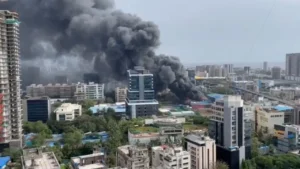
- Residential Fire – Bengaluru (India)
A young professional lost his life due to smoke inhalation in a residential fire. Flames were limited, but smoke toxicity proved fatal. The suspected cause was an electrical fault. This incident reinforced a hard truth: most fire deaths occur due to smoke long before flames reach occupants.
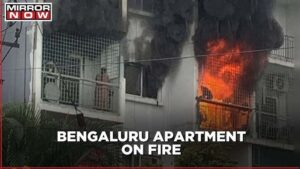
- High-Rise Shaft Fire – Powai, Mumbai (India)
Another residential high-rise fire, again originating in a service shaft. Multiple residents were rescued as smoke spread across floors. The cause was an electrical short circuit in shaft wiring. Different building, same failure—unprotected shafts turning small ignitions into building-wide emergencies.
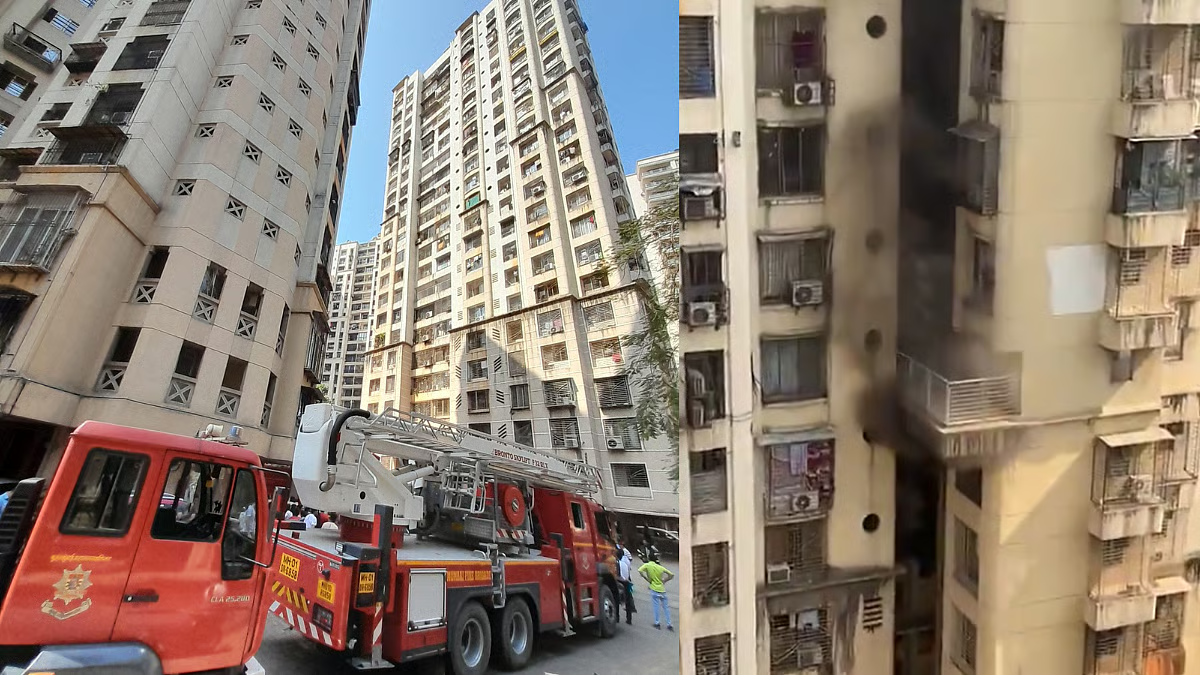
- Footwear (Chappal) Factory Fire – Malappuram, Kerala (India)
A manufacturing unit producing rubber footwear caught fire, resulting in major material loss. The cause was a confirmed electrical short circuit. Rubber, adhesives, and packaging produced dense toxic smoke, accelerating damage. The fire did not spread because of size—it spread because materials and cables allowed it to.
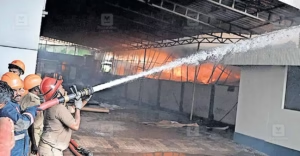
- Plywood Factory Fire – Baikampady, Karnataka (India)
A plywood manufacturing facility suffered extensive damage after a fire triggered by a confirmed electrical short circuit. Wood sheets, resin, and dust allowed flames to propagate rapidly across the plant. Once ignition occurred, there was nothing to slow fire growth across surfaces and structure.
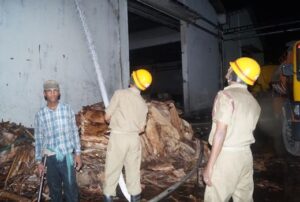
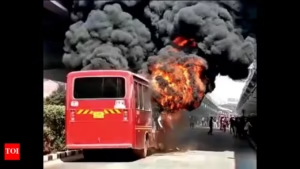
- BRTS Bus Fire – Surat, Gujarat (India)
A city bus caught fire due to an electrical wiring short circuit. Passengers escaped in time, but the bus was completely destroyed. Fire travelled along cable looms, igniting interior materials and producing dense smoke. Portable extinguishers were ineffective against concealed cable fires.
GLOBAL FIRE INCIDENTS – 2026
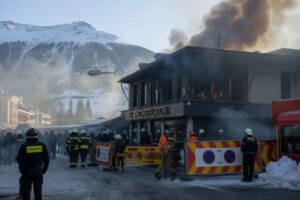
- Mass-Casualty Bar Fire – Crans-Montana, Switzerland
A crowded bar hosting New Year celebrations caught fire in the early hours of January 1. Around 40 people lost their lives and over 100 were injured. Fire spread rapidly across interior finishes and smoke overwhelmed occupants within minutes. The fire brigade response came after the damage was already irreversible.
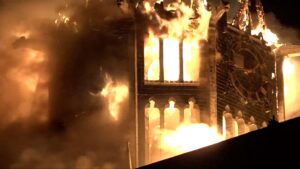
- Historic Church Fire – Amsterdam, Netherlands
A 19th-century heritage church was destroyed by fire on New Year’s Day. Once ignition occurred, fire spread through untreated interiors and concealed voids. The loss was not just structural but cultural—demonstrating that heritage buildings are just as vulnerable without modern fire-preventive measures.
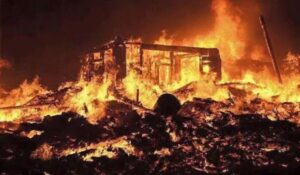
- Multiple Structural Fires – Abuja and Other Regions, Nigeria
Emergency services battled multiple building fires on New Year’s Day across different regions. Fires occurred in residential and commercial structures, overwhelming firefighting capacity. These incidents showed how quickly systems fail when fire prevention and passive protection are absent at scale.
THE COMMON PATTERN IS NO LONGER IGNORABLE
Across all ten incidents—homes, high-rises, factories, buses, bars, and heritage buildings—the same technical failures repeat:
Electrical short circuits start fires
Fire spreads through cables, shafts, ducts, and untreated surfaces
Smoke dominates before evacuation is complete
Structures and interiors fail faster than response systems
Ignition sources differ. Fire behaviour does not.
WHY AMEETUFF EXISTS – AND WHY WE SAY WE STOP FIRES
At Ameetuff, we do not sit in the grey zone of “damage control.”
We design systems to prevent fires from starting and stop them from spreading.
Our coatings and fire-stop solutions address the exact failures seen in every case above:
- Fire-retardant and fire-resistant coatings that do not allow ignition or flame propagation
- Cable and duct protection that prevents electrical faults from becoming fire highways
- Low-smoke, non-toxic systems that reduce smoke inhalation risk
- Structural and surface protection that slows fire growth and preserves integrity
- Fire-stop barriers that seal shafts, penetrations, and service routes
Fire safety is not about reacting faster once flames appear.
It is about ensuring fire never gets the chance to grow.
FINAL WORD
2026 has barely begun, and the warning signs are already clear.
Fires do not wait for permissions, festivals, or fresh calendars.
Celebration should create memories—not ashes.
With the right preventive fire safety measures, we can celebrate more, worry less, and rebuild nothing.
Fire doesn’t care what day it is.
Preparation decides everything.